


Best Flooring for Banks That Handles Branch Traffic

A bank floor has to perform under a different kind of pressure than a typical office. It sees wet shoes in winter, constant movement between teller lines and offices, rolling chairs, secure equipment, cleaning carts, and customers who notice every worn edge. The best flooring for banks balances appearance with long-term performance, safety, and a maintenance plan that works around branch hours.
For facility managers, property owners, and general contractors, the right decision is rarely one material throughout the entire building. A successful bank flooring scope usually assigns each material to the job it performs best, then considers installation sequencing, subfloor conditions, and the ability to keep the branch operational.
What Banks Need From Their Flooring
Bank interiors must look professional, but appearance alone is not enough. Flooring needs to withstand concentrated foot traffic, resist staining and moisture, support safe walking surfaces, and remain presentable between scheduled maintenance visits. In older branches, it also needs to work with existing substrates and transitions without creating trip hazards.
The front entrance and lobby typically receive the most abuse. Water, deicing salt, grit, and dirt are carried in during New England weather. Teller areas experience repeated standing and rolling-chair traffic. Offices and meeting rooms need acoustical control and a finish appropriate for confidential conversations. Break rooms, restrooms, and service corridors require surfaces that can handle spills and frequent cleaning.
That is why material selection should begin with a traffic map. Identify where customers enter, queue, sit, meet with staff, and move through the building. Then match the flooring to those conditions instead of selecting one finish for the entire branch based only on color or first cost.
Best Flooring for Banks by Area
Luxury Vinyl Tile and Vinyl Plank for Lobbies and Offices
Luxury vinyl tile, often called LVT, and vinyl plank are strong options for customer-facing areas, offices, and corridors. They provide the appearance of wood or stone while offering better moisture resistance and easier day-to-day care than many natural materials. Commercial-grade products are available in a wide range of colors and patterns, making it possible to maintain a consistent brand-forward look without specifying a high-maintenance finish.
For banks, the main advantage is balance. LVT and vinyl plank are durable enough for regular foot traffic, comfortable underfoot, and generally easier to replace in isolated damaged areas than broadloom carpet or wood flooring. They also work well with thoughtfully designed entry mat systems that reduce the grit reaching the finished floor.
Not every vinyl product is equal. A low-cost residential-grade material may show wear early in a busy branch. The specification should account for wear-layer thickness, commercial warranty requirements, adhesive compatibility, and the condition of the substrate. Uneven concrete or failed existing flooring can telegraph through resilient materials if preparation is rushed.
Commercial Carpet Tile for Offices and Meeting Rooms
Carpet tile remains a practical choice for private offices, conference rooms, back-office spaces, and selected waiting areas. It reduces footstep noise, adds warmth, and can help create a more comfortable setting for financial discussions. Carpet tile is especially useful where underfoot comfort and acoustics matter more than moisture resistance.
Its service advantage is straightforward: individual tiles can be replaced when damaged or stained. That is valuable in occupied buildings where a localized repair is preferable to replacing an entire room. Patterned, low-pile commercial carpet also does a better job concealing routine soil than a light solid-color product.
Carpet is not the right answer near exterior entrances, ATMs exposed to weather, or areas where wet footwear is common. It needs regular vacuuming and periodic professional cleaning to protect its appearance and extend its useful life. In a bank, carpet performs best when it is kept away from the wettest traffic paths and paired with a maintenance program rather than treated as a set-it-and-forget-it finish.
Porcelain or Ceramic Tile for Entrances and Restrooms
Porcelain and ceramic tile are proven choices for vestibules, restrooms, and other moisture-prone areas. Properly selected tile handles water, salt, and frequent cleaning well. It also provides a durable, polished look that fits many financial institutions, particularly where the goal is a more permanent finish at the entry.
The trade-off is that tile is hard underfoot and can be more expensive to repair when movement, cracking, or substrate failure occurs. Grout is another consideration. Light grout can stain quickly in a high-traffic entrance, while poorly maintained grout can make an otherwise clean facility look neglected. Selecting an appropriate grout color and planning for periodic hard-surface and grout cleaning are part of the specification, not an afterthought.
Slip resistance matters. A polished tile may look attractive in a showroom but can be a poor fit for a branch entrance during rain or snow. For public areas, select a finish with appropriate traction and use quality walk-off mats to control moisture before it reaches the tile.
VCT for Back-of-House and Budget-Conscious Projects
Vinyl composition tile, or VCT, is still common in commercial facilities because it is economical, durable, and repairable. It can be a sensible option for staff corridors, utility areas, break rooms, and other back-of-house spaces where performance and budget carry more weight than a premium appearance.
VCT does require disciplined maintenance. It needs proper stripping, waxing, and routine burnishing to maintain a clean, protected finish. When that maintenance is deferred, the floor can become dull, stained, and difficult to restore. A bank choosing VCT should budget for ongoing floor care from the start. With the right rejuvenation and waxing schedule, it can provide dependable service for many years.
Epoxy Coatings for Service Areas and Utility Rooms
Epoxy floor coatings are not usually a public-lobby finish, but they can be a strong choice for mechanical rooms, storage areas, loading spaces, and other hard-working service zones. They create a durable, cleanable surface that resists many spills and stands up well to carts and equipment.
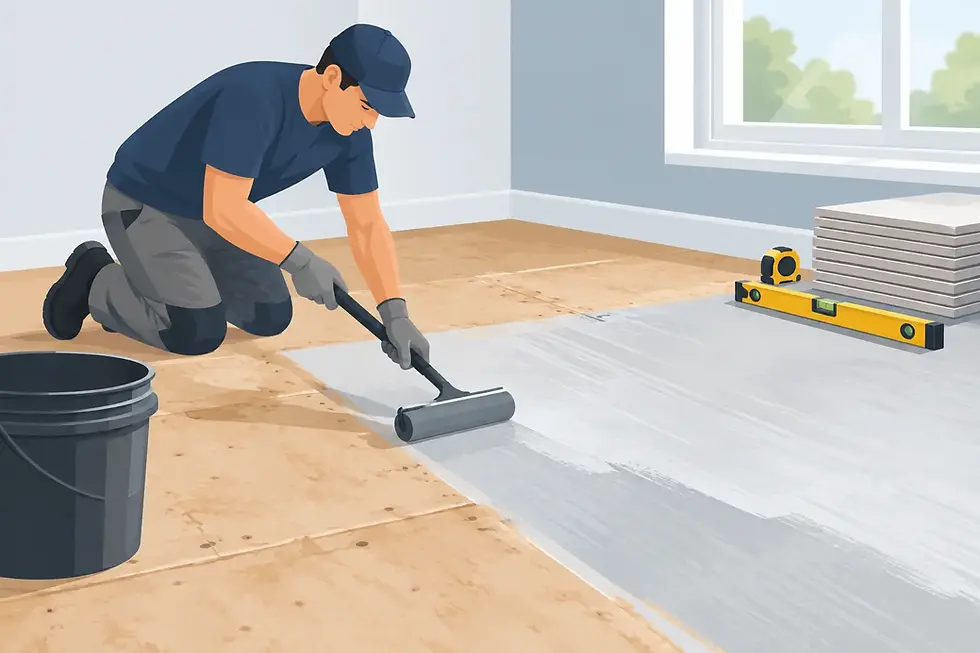
The condition of the concrete is critical. Moisture issues, contamination, cracks, and poor surface preparation can compromise adhesion. Epoxy is a technical installation, so the contractor should evaluate the slab before recommending a coating system. In the right environment, it is a practical long-term solution. In the wrong environment, it can fail early regardless of how good it looks on installation day.
Installation Planning Matters as Much as Material
A flooring product can be well specified and still create problems if the project is poorly planned. Banks operate with security requirements, customer access concerns, and limited tolerance for disruption. Work often needs to be completed after hours, on weekends, or in phases that keep essential areas available.
Before installation begins, the flooring contractor should confirm furniture moves, access points, demolition requirements, substrate repairs, curing times, and temporary transitions. Teller lines, vault-adjacent areas, workstations, and technology equipment may require coordination with bank personnel and other trades. Clear sequencing protects the schedule and reduces the chance of avoidable downtime.
For occupied branches, phased work is often the most practical approach. A contractor can complete offices, corridors, or portions of a lobby in separate stages while maintaining safe paths for staff and customers. Dust control, clean work areas, and reliable daily communication are not extras on this type of project. They are part of doing the work correctly.
Maintenance Protects the Investment
The best flooring for banks is flooring that still looks professional years after installation. That outcome depends on routine care. Entry mats should be cleaned and replaced as needed. Resilient floors need manufacturer-approved cleaning methods. Carpet benefits from prompt spot treatment and periodic extraction cleaning. Tile and grout need attention before soil becomes embedded.
A maintenance plan also helps facility teams make better decisions about replacement. A worn VCT floor may be a candidate for restoration and waxing rather than full replacement. Carpet tile with localized damage may need only targeted tile replacement. Early evaluation can extend the life of existing flooring and help control capital costs.
For Boston-area banks, seasonal planning is especially useful. Winter weather brings more moisture and salt into branch entrances, so matting, cleaning frequency, and inspections should be adjusted before the first major storm. A floor that is maintained consistently is safer, easier to clean, and more likely to support the professional image customers expect.
The right bank flooring project starts with a practical site review, not a catalog sample. Consider how each area is used, what the existing substrate can support, and how the work can be completed without disrupting operations. A knowledgeable commercial flooring contractor can turn those details into a finish package that looks right on opening day and continues to perform long after it.


Comments