


Best Flooring for Medical Clinics That Holds Up

A medical clinic floor has to do more than look clean at opening time. It has to withstand disinfectants, rolling equipment, wet-weather traffic, frequent mopping, and long days on its feet. The best flooring for medical clinics depends on how each room is used, but the right choice always supports hygiene, safety, durability, and dependable day-to-day operations.
For facility managers, property owners, and project teams, the decision should not begin with color or price per square foot alone. A lower-cost floor that stains, separates at seams, or requires repeated repairs can create disruption in an occupied clinic and increase costs over its service life. Flooring should be specified around the work the space performs, then installed with the preparation and scheduling discipline a healthcare setting requires.
What Medical Clinic Flooring Needs to Handle
Clinical environments put different demands on flooring than a typical office or retail space. Reception areas carry dirt, water, and salt during a New England winter. Exam rooms need surfaces that can be cleaned thoroughly and regularly. Corridors and treatment areas may see rolling carts, wheelchairs, mobile equipment, and frequent foot traffic. Staff work areas benefit from more underfoot comfort, while restrooms require dependable slip resistance.
A practical flooring specification addresses several requirements at once: cleanability, moisture resistance, durability, traction, sound control, and appearance retention. It should also fit the facility's cleaning program. Some finishes tolerate common disinfectants well; others may dull, stain, or become difficult to maintain when exposed to aggressive products over time.
Accessibility matters as well. Floor transitions, seams, and changes in height must be planned carefully to support safe movement for patients using walkers, canes, wheelchairs, or other mobility devices. The finished floor is only part of the equation. Subfloor condition, adhesive selection, transition details, wall bases, and moisture testing all affect the final result.
Best Flooring for Medical Clinics by Area
There is rarely one material that makes sense for every part of a clinic. A better approach is to use the right product in the right location while keeping the overall maintenance program manageable.
Sheet Vinyl for Exam and Treatment Rooms
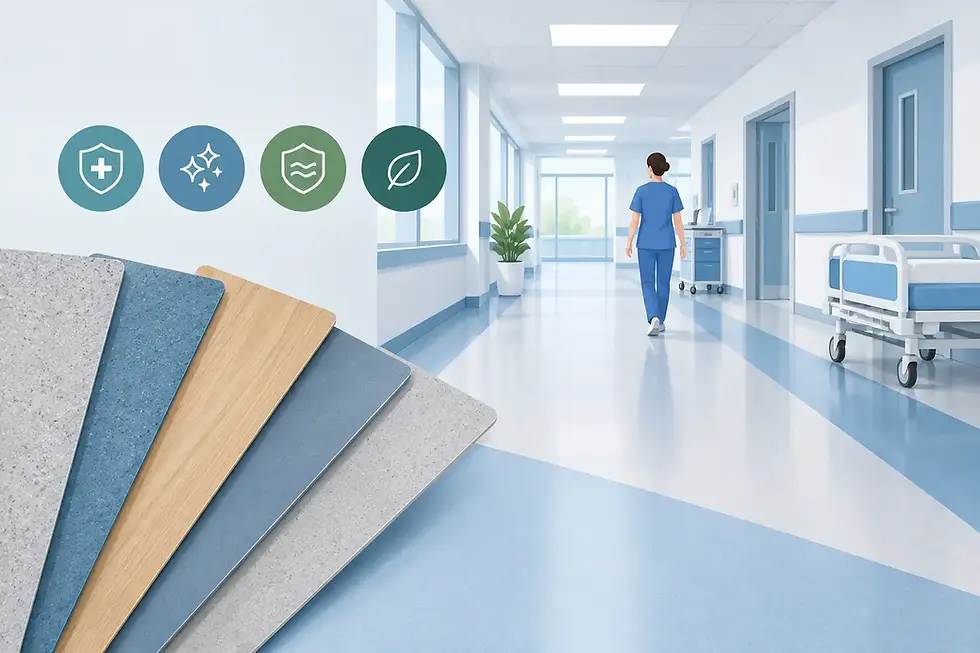
Sheet vinyl remains one of the strongest choices for exam rooms, treatment areas, laboratories, and other spaces where hygiene is the priority. Its major advantage is the ability to create a largely continuous surface with fewer seams than tile or plank products. When properly installed with heat-welded seams and an appropriate coved base, sheet vinyl helps reduce areas where moisture and debris can collect.
It is also resilient underfoot, which can be easier on staff than hard ceramic tile during long shifts. Many healthcare-grade sheet vinyl products are designed to resist stains, scuffs, and regular cleaning chemicals. The trade-off is that installation requires experienced preparation and workmanship. Seams, flash cove details, and substrate imperfections are not forgiving. A poor installation can compromise the benefits that made sheet vinyl the right material in the first place.
Luxury Vinyl Tile and Plank for Public Areas
Luxury vinyl tile, often called LVT, and luxury vinyl plank can be a practical fit for lobbies, reception spaces, private offices, consultation rooms, and administrative areas. It gives clinics more design flexibility than sheet goods, including wood and stone visuals that can make a patient-facing space feel less institutional.
Commercial-grade LVT can perform well under normal clinic traffic when the product is selected for the use and installed over a properly prepared substrate. It is not the best choice for every high-moisture or highly clinical area. Its seams are more numerous than sheet vinyl, and individual planks or tiles may be vulnerable if moisture reaches the adhesive or if rolling loads exceed the product's rating.
For a medical office, LVT is often a good balance of appearance, durability, and repairability. If damage occurs, a qualified flooring contractor may be able to replace a limited section instead of removing a large area of flooring. That said, replacement materials should be retained from the original project to avoid dye-lot or style differences later.
Rubber Flooring for Comfort and Traction
Rubber flooring is worth serious consideration in physical therapy rooms, staff areas, rehabilitation spaces, corridors, and locations where comfort and traction are critical. It absorbs impact better than harder surfaces and can help reduce fatigue for employees who stand for extended periods. It also provides good grip underfoot when specified correctly.
Rubber comes with a different maintenance profile. Some products can show oils, residue, or surface marks if cleaning procedures are not followed. Material cost can also be higher than standard vinyl options. Still, where patient mobility, staff comfort, or sound reduction is a major concern, rubber can justify the added investment.
Epoxy Coatings for Demanding Back-of-House Areas
Epoxy flooring systems are not usually the first choice for a patient waiting room, but they are useful in certain clinic support areas. Mechanical rooms, storage spaces, utility areas, and some specialty service environments may benefit from a durable, monolithic coating that resists moisture and is easy to clean.
The condition of the concrete slab is the deciding factor. Epoxy coatings require thorough surface preparation and moisture evaluation. Applying a coating over a slab with unresolved moisture issues can lead to adhesion failures, bubbling, or peeling. The system also needs to be selected for the expected traffic, chemical exposure, and slip-resistance requirements.
VCT When Budget and Maintenance Support It
Vinyl composition tile, or VCT, remains common in institutional facilities because of its initial cost and long history of use. It can be a sensible option in large, lower-risk areas when the facility has a consistent floor care program. With regular cleaning, waxing, and periodic restoration, VCT can maintain a professional appearance.
The key consideration is maintenance. VCT is not a set-it-and-forget-it floor. Without proper finish protection and scheduled care, it can become stained, dull, and difficult to clean. For clinics with limited maintenance resources, a lower-maintenance vinyl or rubber product may provide better long-term value even if the initial investment is higher.
Installation Details Matter as Much as the Material
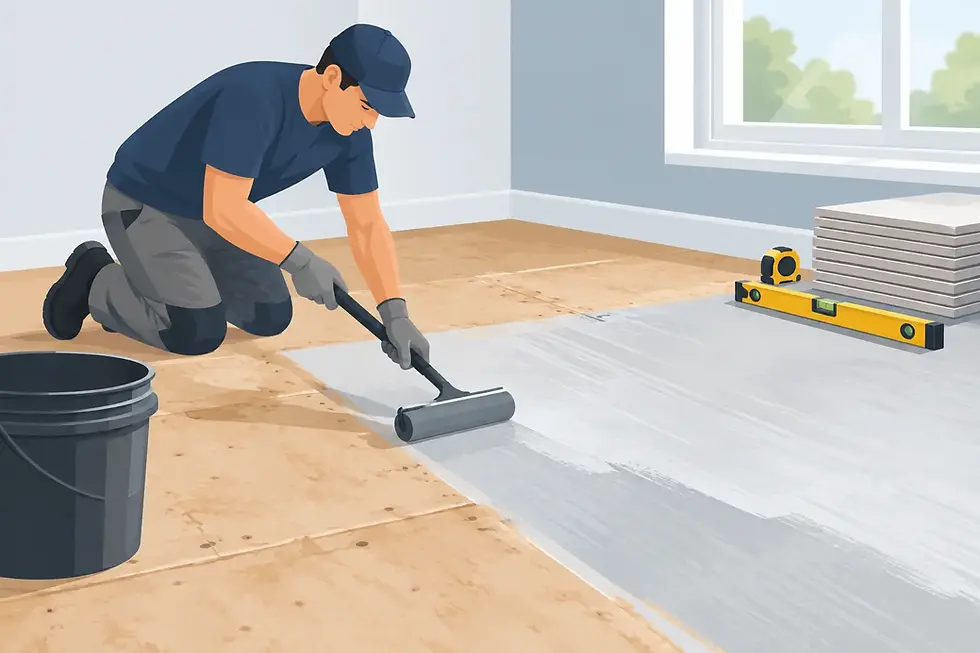
Even the right flooring product can fail when moisture, surface preparation, or installation sequencing is overlooked. Medical clinics often occupy existing buildings, where concrete slabs may have old adhesive residue, uneven areas, cracking, or elevated moisture conditions. These issues should be identified before materials are ordered and before a construction schedule is locked in.
Moisture testing is especially important for resilient flooring and coatings. A slab that appears dry can still release enough moisture vapor to affect adhesives and finishes. Proper patching and leveling are equally important. Rolling equipment will quickly expose low spots, ridges, and weak repairs that might not be obvious during a quick visual inspection.
Scheduling also deserves attention. Many clinics cannot close for a full flooring replacement during normal business hours. Phased work, evening installation, weekend shifts, and clear isolation of work areas can keep a project moving while protecting patient access and staff operations. The contractor should coordinate material delivery, demolition, odor control, dust containment, cure times, and furniture or equipment moves before work begins.
Plan for Cleaning and Life-Cycle Cost
The best floor on paper is not always the best floor for the facility. A clinic should choose materials that its staff or cleaning provider can maintain consistently. Ask how the floor responds to disinfectants, whether it requires finish coats, how often it needs deep cleaning, and what procedures are needed for stain removal or repairs.
Life-cycle cost provides a clearer picture than installation price alone. Include expected maintenance, downtime, repair frequency, and replacement difficulty in the decision. A floor with a higher upfront cost may reduce disruption and labor over years of service. Conversely, a more economical product may be appropriate for a short-term tenant fit-out or a low-traffic administrative area.
Color and pattern should support the maintenance plan, too. Very light floors can show tracked-in soil quickly, while extremely dark floors may reveal dust and scuffs. Mid-tone colors and subtle visual variation often perform well in busy patient areas without making the clinic feel dated or overly industrial.
Choosing a Flooring Partner for an Occupied Clinic
Healthcare flooring work requires more than product knowledge. It requires careful planning, dependable scheduling, and respect for an environment where patients and staff are present. A qualified commercial flooring contractor should understand how to work around occupied spaces, coordinate with general contractors and facility teams, and address substrate conditions before they become change orders or delays.
At Otis Flooring, projects are approached with hands-on management and practical communication from the estimate through completion. Whether the scope involves resilient flooring, VCT restoration, ceramic tile, carpet, or epoxy coatings, the goal is the same: deliver a finished floor that performs under real operating conditions.
Before making a final selection, walk each room with the people responsible for cleaning, patient flow, equipment, and daily operations. Their input will reveal where comfort, moisture control, repairability, or slip resistance matters most - and help turn a flooring purchase into a reliable long-term facility decision.

Comments