


Carpet Tile vs Sheet Vinyl for Commercial Floors
- Joey Otis

- 10 minutes ago
- 6 min read
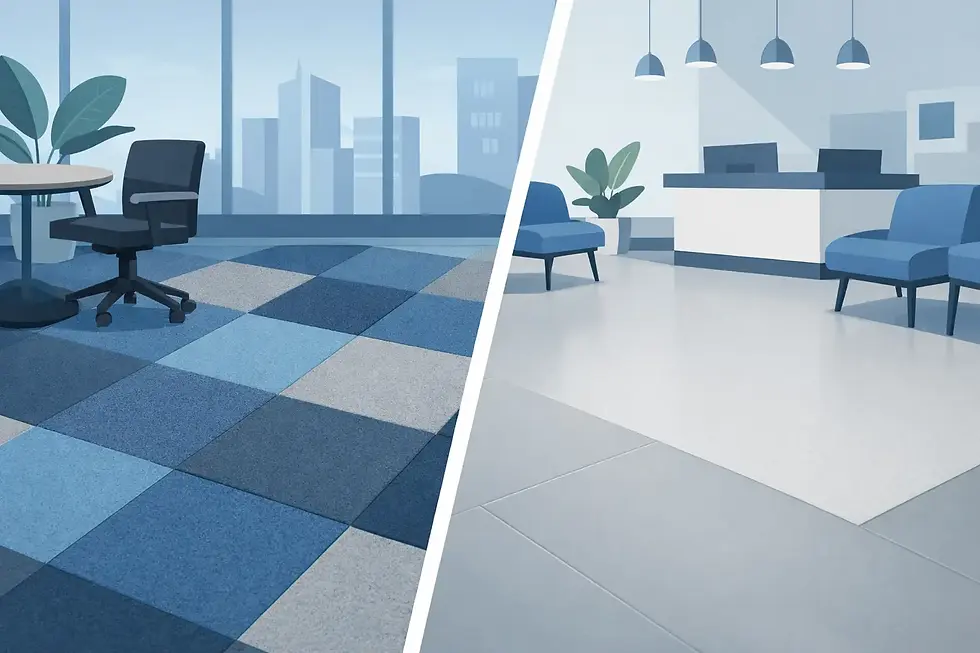
A flooring decision can affect far more than appearance in an occupied building. In a bank lobby, medical office, school corridor, or municipal workspace, the wrong material can create cleaning problems, premature replacement costs, noise concerns, or disruption during repairs. When comparing carpet tile vs sheet vinyl, the better choice depends on how the space is used, what it must withstand, and how much downtime the facility can accept.
Carpet tile and sheet vinyl are both proven commercial materials, but they solve different problems. Carpet tile brings comfort, sound control, and practical spot replacement. Sheet vinyl provides a continuous, moisture-resistant surface that supports demanding cleaning routines. A reliable decision starts with the conditions on the floor, not just the sample board.
Carpet Tile vs Sheet Vinyl: The Core Difference
Carpet tile is modular carpet manufactured in individual squares or planks. It is installed in sections, usually with adhesive or a pressure-sensitive system. If one area becomes stained, damaged, or worn, that section can often be replaced without removing the entire floor.
Sheet vinyl is resilient flooring supplied in broad rolls and installed in large sections. Its seams can be minimized or heat-welded where sanitation and moisture control are priorities. It is commonly specified for healthcare settings, restrooms, clinical areas, kitchens, corridors, and other spaces that need a cleanable, nonporous surface.
The comparison is not simply soft flooring versus hard flooring. Carpet tile is often the stronger performer in offices and meeting areas where acoustics and occupant comfort matter. Sheet vinyl is usually the practical choice where wet cleaning, spills, infection-control protocols, or rolling equipment place more demand on the floor.
Where Carpet Tile Performs Best
Carpet tile is built for commercial spaces that need a finished appearance without treating every stain as a full-floor failure. Office suites, private financial offices, conference rooms, training centers, hotel corridors, and administrative areas are common applications. The material absorbs sound, reduces footfall noise, and creates a more comfortable surface underfoot than resilient flooring.
That acoustic benefit is meaningful in busy workplaces. In open offices, call centers, classrooms, and conference spaces, hard surfaces allow sound to travel. Carpet tile helps reduce reverberation and can make conversations easier to manage. For facilities trying to improve comfort without major architectural changes, that matters.
Modularity is another advantage. A coffee spill near a break room, a damaged tile at an entrance, or a worn path beneath a chair does not always require broad replacement. With attic stock from the original installation, a maintenance team can replace affected tiles selectively. This can help control long-term operating costs, especially in buildings with regular tenant turnover or heavy daily traffic.
Carpet tile also works well when phased installation is required. A contractor can complete areas in sequence, moving furniture and coordinating around occupied operations. The exact approach depends on the product, substrate, adhesive, and building schedule, but modular material gives project teams useful flexibility.
Carpet Tile Trade-Offs
Carpet tile still requires routine vacuuming and scheduled professional cleaning. Dirt and grit can work down into the fiber, particularly near entrances and elevator lobbies. Without walk-off mats, regular vacuuming, and prompt spill response, even a quality carpet tile system will show wear sooner than it should.
Moisture is another concern. Carpet tile is not the right finish for spaces with frequent wet exposure, plumbing risk, or aggressive disinfecting routines. It can also hold odors if spills are neglected. In healthcare buildings, carpet tile may be appropriate in administrative offices or waiting areas, while sheet vinyl is better suited for clinical and treatment spaces.
Where Sheet Vinyl Performs Best
Sheet vinyl is a workhorse material for facilities that need a durable, cleanable surface with minimal seams. Hospitals, medical offices, labs, assisted living facilities, restrooms, cafeterias, school health rooms, and public corridors frequently rely on it for good reason. It stands up well to routine mopping, many cleaning protocols, spills, and daily traffic.
Its continuous format is a major benefit. Fewer seams mean fewer places for water, dirt, and contaminants to collect. In healthcare and compliance-driven environments, sheet vinyl can be installed with heat-welded seams and coved base details to create a more hygienic transition between the floor and wall. Those details must be installed correctly to perform as intended, which makes experienced preparation and workmanship essential.
Sheet vinyl also handles wheeled traffic well when the correct product is specified. Carts, wheelchairs, rolling office chairs, and service equipment move more easily over a resilient surface than over carpet. That can support safer and more efficient operations in active facilities.
From a maintenance standpoint, sheet vinyl is usually straightforward. Daily dust mopping, prompt spill cleanup, and manufacturer-approved wet cleaning can keep it looking professional. The key is using the right products and avoiding harsh methods that damage the finish or leave residue behind.
Sheet Vinyl Trade-Offs
Sheet vinyl is less forgiving when the subfloor is not properly prepared. Imperfections, moisture issues, patches, and uneven areas can telegraph through the material or affect adhesion. A careful moisture test and substrate evaluation should happen before installation, especially in concrete buildings throughout Greater Boston and New England, where slab conditions can vary widely.
Repairs can also be more visible than carpet tile repairs. While skilled installers can patch sheet vinyl, a patch may not disappear completely, particularly with patterned material. Material selection, layout planning, and retaining extra product from the original project all help reduce this risk.
Sheet vinyl does not offer the same acoustic softness as carpet tile. In offices or public waiting areas, its harder surface can increase footfall noise. Designers may address this with acoustic ceilings, wall treatments, furniture, or strategically placed entrance matting, but the flooring itself will not provide the same sound absorption.
Installation Planning Matters as Much as Material Choice
A successful flooring project begins with the existing conditions. Before selecting carpet tile or sheet vinyl, evaluate the substrate, moisture levels, traffic patterns, cleaning practices, transitions to adjacent flooring, and building schedule. A product that performs well in one room may fail quickly in another if the conditions are different.
For carpet tile, the installer must prepare a clean, smooth, dry substrate and follow the adhesive requirements precisely. Tile layout also deserves attention. Directional patterns, quarter-turn layouts, and plank formats can influence the finished appearance and how wear is perceived over time.
For sheet vinyl, floor preparation is even more visible. The substrate must be smooth because resilient material follows the surface beneath it. Seams, flash-coving, transitions, and details around door frames or equipment bases require careful coordination. In occupied facilities, installation may need to occur after hours or in controlled phases to protect operations and allow adhesives to cure properly.
Experienced project management helps prevent avoidable surprises. That includes confirming access, sequencing rooms, coordinating furniture moves, protecting completed areas, and communicating clearly with the facility team. A lower initial installation price is not a savings if it leads to rushed preparation, delayed opening, or an early replacement cycle.
Cost Should Be Measured Over the Service Life
Material price alone does not settle the carpet tile versus sheet vinyl question. Installation conditions, preparation requirements, maintenance labor, repair expectations, and anticipated service life all contribute to the actual cost of ownership.
Carpet tile can be cost-effective where selective replacement will likely be needed. In an office with spills, rolling chairs, and frequent reconfigurations, replacing individual tiles may be less disruptive than replacing a broad area of flooring. Its routine maintenance needs should be included in the operating plan, however.
Sheet vinyl can deliver strong value in wet or high-cleaning environments because the surface is easier to maintain and better suited to moisture exposure. It may require more intensive subfloor preparation upfront, but that investment is often justified in clinical, public, and service areas where sanitation and durability are nonnegotiable.
For both materials, specify commercial-grade products appropriate for the traffic level. A light-duty product installed in a busy corridor is not a budget solution. It is a deferred expense.
Making the Right Choice for Your Facility
Choose carpet tile when your priority is sound control, comfort, design flexibility, and localized repair in dry office-oriented spaces. Choose sheet vinyl when moisture resistance, cleanability, infection-control details, and a continuous surface are the driving requirements.
Many facilities benefit from using both. A medical office may use sheet vinyl in exam rooms, restrooms, and clinical corridors while placing carpet tile in administrative offices and staff meeting rooms. A financial branch may use carpet tile in customer consultation areas and resilient flooring near entrances, service counters, and break rooms. Matching each material to the job produces better results than forcing one flooring type across every space.
For a commercial flooring project, the best next step is a site review that considers the building's day-to-day demands, not just its floor plan. Otis Flooring approaches that work with careful preparation, realistic scheduling, and the installation details needed to keep a facility operating with minimal disruption.


Comments