


Antimicrobial Flooring Technology for Facilities

A floor can look clean at the end of a shift and still create a maintenance concern. Grout joints, worn finish, seams, moisture-prone corners, and high-touch traffic paths can all make routine cleaning harder to perform consistently. Antimicrobial flooring technology is designed to add another layer of material protection in these demanding conditions, but it is not a substitute for cleaning, disinfection, or proper installation.
For facility managers, general contractors, and property owners, the real question is not whether a product carries an antimicrobial claim. The question is whether the flooring system fits the building's use, cleaning procedures, traffic level, and downtime requirements. A good specification considers the entire assembly: substrate condition, adhesive, seams, transitions, cove base, finish, and long-term maintenance.
What Antimicrobial Flooring Technology Does
Antimicrobial flooring technology refers to materials or coatings formulated to help inhibit the growth of certain microorganisms on the product surface. Depending on the flooring type, that protection may be built into the wear layer, incorporated into a coating, or added through a factory-applied finish.
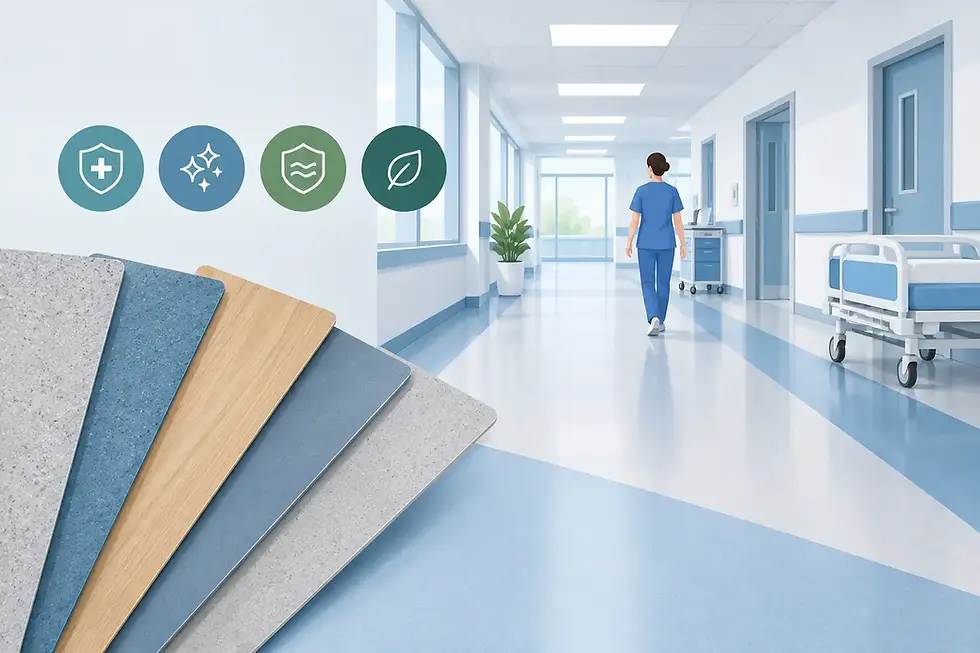
This can be useful in spaces where floors see frequent traffic, spills, tracked-in moisture, or more intensive cleaning. Healthcare areas, schools, public buildings, fitness facilities, food-adjacent areas, banks, and multi-tenant commercial properties may all benefit from materials selected with hygiene and maintenance in mind.
The distinction matters: antimicrobial protection is generally intended to protect the flooring material itself from odor-causing or stain-causing microbes. It does not make a floor sterile, prevent illness, or replace a facility's infection-control protocol. Cleaning remains necessary to remove dirt, organic matter, spills, and contaminants from the surface.
Claims should also be reviewed carefully. Performance can vary by product, microorganism, testing method, wear condition, and cleaning exposure. Facility teams should request current manufacturer documentation and make sure any stated benefit aligns with the intended application.
Where It Makes Practical Sense
The strongest case for antimicrobial flooring is usually a space with a clear operational need, not simply a desire for a marketing feature. In an occupied medical office, for example, a resilient sheet floor with heat-welded seams may be easier to maintain than a surface with open joints or difficult transitions. In a locker room or restroom corridor, moisture management and slip resistance may be just as important as antimicrobial additives.
In schools and municipal buildings, the decision often comes down to durability, ease of cleaning, and budget over the full service life of the floor. A product that resists staining and supports standard maintenance may reduce avoidable replacement costs. But a premium material is not automatically the better value if the building's traffic is moderate and the existing cleaning program does not support its maintenance requirements.
Commercial kitchens, food preparation areas, and industrial environments require another level of review. Chemical resistance, thermal exposure, drainage, slip resistance, and local code requirements can outweigh a standalone antimicrobial feature. In these settings, resinous or epoxy floor coatings may be appropriate when the substrate, moisture conditions, and operating environment support that system.
Flooring Types and Installation Details Matter
No antimicrobial feature can correct poor workmanship or an unsuitable flooring choice. If moisture is coming through a slab, seams are improperly finished, grout is damaged, or transitions collect water, the floor will remain difficult to maintain regardless of its surface technology.
Resilient Flooring
Luxury vinyl tile, vinyl plank, sheet vinyl, and VCT are common commercial choices because they offer a broad range of styles, budgets, and maintenance options. Some products include antimicrobial treatments in the wear layer or finish. Sheet goods can be especially practical in healthcare and other sensitive environments because fewer seams may mean fewer areas for soil and moisture to collect.
LVT and vinyl plank provide design flexibility and efficient replacement of damaged sections. However, the number of joints, the installation pattern, and the condition of the subfloor all affect long-term performance. In spaces with regular wet cleaning or higher moisture exposure, a product with more continuous surface coverage may be the better operational choice.
Ceramic and Porcelain Tile
Tile is durable, moisture-resistant, and well suited to restrooms, entryways, break rooms, and other wet areas. The maintenance concern is often not the tile itself but the grout. Standard grout can discolor, absorb soils, and become difficult to clean when it is not properly sealed or when cleaning practices are inconsistent.
Epoxy grout or specialized grout systems may improve stain and moisture resistance in the right application. The trade-off is higher material and installation cost, along with the need for experienced installation. Tile layout, slope, expansion joints, and grout selection should be addressed before work begins, particularly in high-use commercial areas.
Carpet and Carpet Tile
Carpet products may include treatments intended to resist odor, staining, or microbial growth. These can be useful in offices, training rooms, hospitality spaces, and tenant interiors, but they do not eliminate the need for a planned cleaning program. Vacuuming removes dry soil, while periodic extraction addresses embedded soils that wear fibers and affect appearance.
Carpet tile offers a practical advantage in occupied commercial spaces because damaged modules can often be replaced without taking an entire room out of service. Still, moisture events must be handled promptly. A carpet treatment cannot resolve water intrusion beneath the backing or prevent damage caused by a delayed response.
Resinous and Epoxy Systems
Seamless resinous flooring can be a strong option for facilities that need a continuous, cleanable surface. When properly designed, epoxy and other resin systems can provide chemical resistance, durability, and coved transitions that reduce dirt traps at wall edges. They are commonly considered for laboratories, service areas, institutional spaces, and certain back-of-house operations.
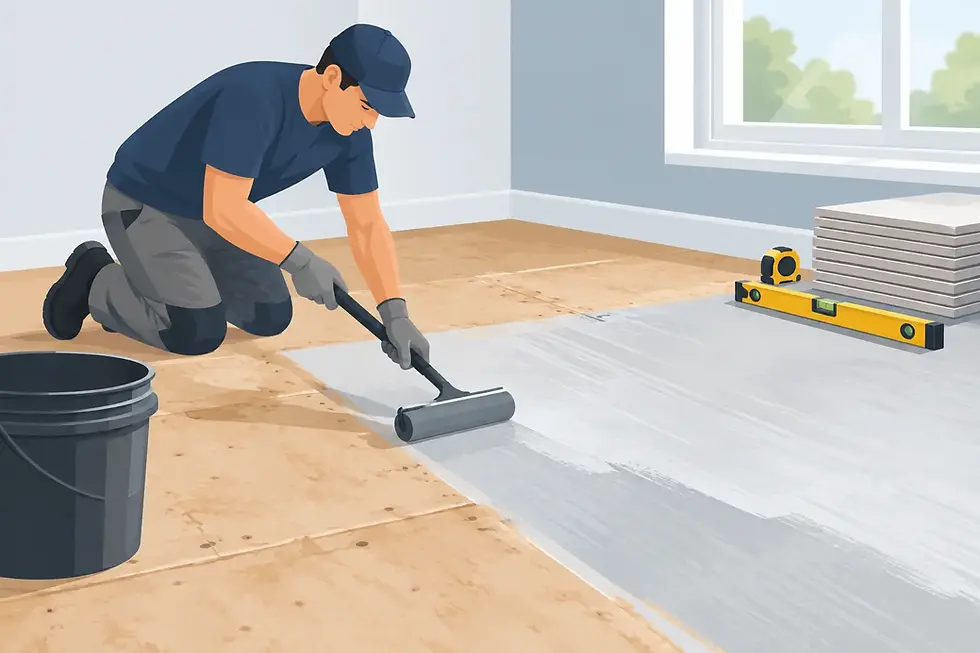
The preparation work is critical. Concrete must be tested and properly prepared, cracks and joints need to be addressed correctly, and the system must be matched to expected loads and exposure. Rushing the substrate phase is one of the fastest ways to create adhesion failures, bubbling, or premature wear.
Cleaning Is Still the First Line of Defense
A floor's performance depends on what happens after installation. Antimicrobial additives may support material protection, but daily and scheduled maintenance control the conditions that lead to visible soil, odor, staining, and deterioration.
Use cleaning products approved for the floor type and follow correct dilution rates. Stronger is not always better. Overuse of chemicals can leave residue, dull finishes, attack protective coatings, or create slippery conditions. For VCT, a scheduled program of cleaning, restorative work, and waxing can extend the usable life of the floor and maintain a professional appearance.
Hard-surface and grout cleaning should be planned before discoloration becomes severe. In high-traffic lobbies, corridors, restrooms, and break areas, periodic deep cleaning can restore appearance and help prevent buildup in textured surfaces and joints. Entrance matting also deserves attention. It reduces the amount of abrasive grit and moisture brought onto the finished floor in the first place.
Questions to Ask Before Specifying a Product
Before selecting a floor based on antimicrobial claims, facility teams should define the operational conditions. Consider the amount and type of traffic, likely spills, moisture exposure, cleaning chemicals, equipment loads, and expected hours available for installation. A product that works well in a private office may not be appropriate for an occupied clinic or a public corridor open from early morning through evening.
Ask how the antimicrobial feature is incorporated into the material and what the manufacturer specifically claims it does. Confirm the warranty requirements, recommended cleaning procedures, slip-resistance information, and repair options. If a project has infection-control, food-service, accessibility, or public procurement requirements, coordinate with the appropriate project stakeholders before ordering materials.
Installation sequencing should be part of the conversation from the beginning. Flooring may need to be completed at night, in phases, or around occupied departments. This affects product selection because cure times, odor, moisture mitigation, furniture moves, and access restrictions can influence both cost and schedule.
A Better Standard for Facility Floors
The best flooring decision is rarely based on one feature. It is based on a system that holds up under real use, can be cleaned without excessive labor, and can be installed with minimal disruption to the people using the building. That is where experienced project planning makes a measurable difference.
For greater Boston facilities, Otis Flooring approaches these decisions with the practical details in view: the existing substrate, the work schedule, the required finish, and the maintenance demands that continue after turnover. Antimicrobial properties can be a valuable part of the specification when they support the use of the space. They should never distract from the fundamentals of sound material selection, precise installation, and consistent care.
A productive next step is to walk the space with the people responsible for cleaning and daily operations. Their experience with moisture, traffic patterns, equipment, and recurring problem areas will often point to the flooring solution that performs best long after the project is complete.

Comments