


Are Epoxy Floors Slippery? What Facility Teams Need

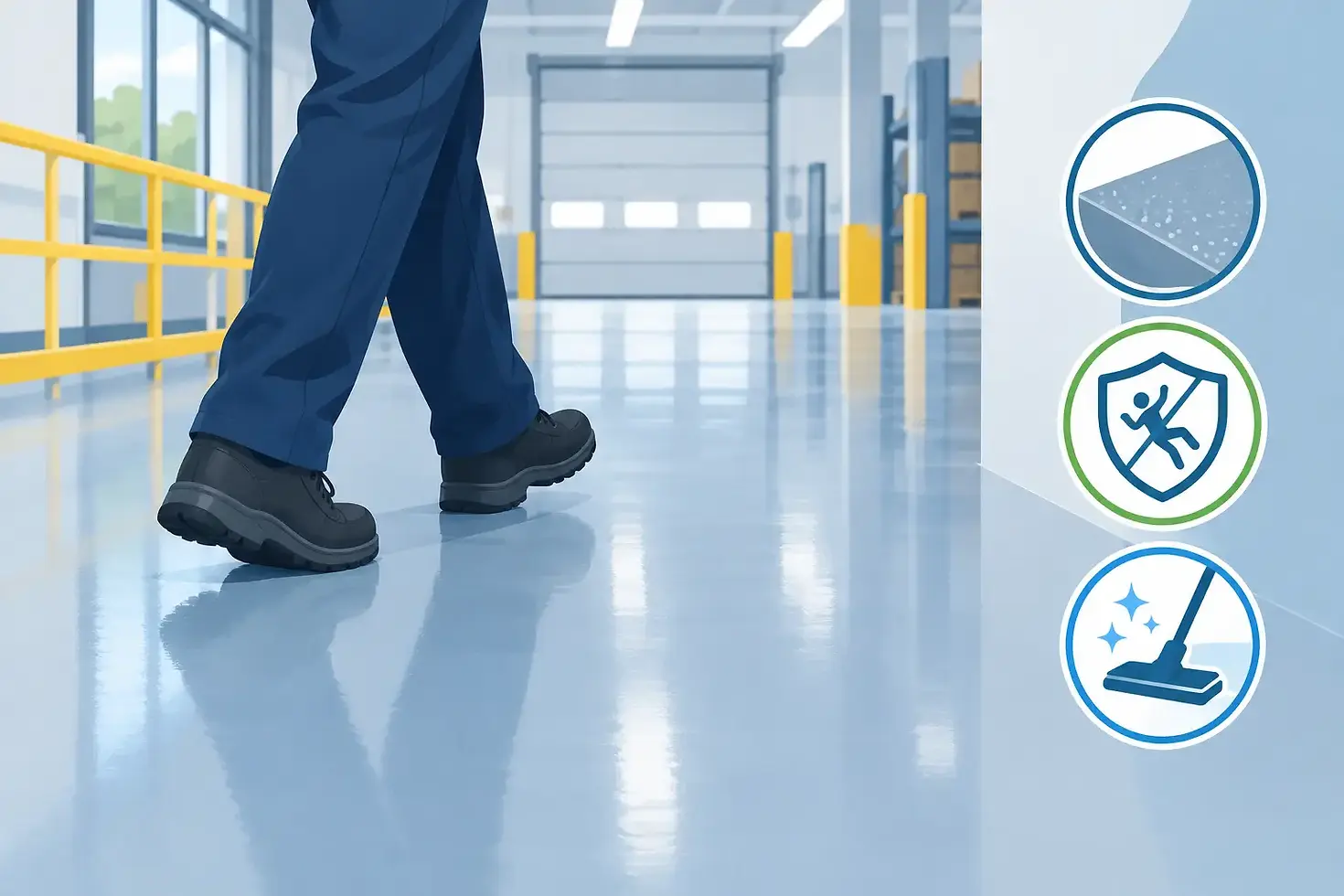
A glossy epoxy floor can look slick before anyone takes a step on it. That appearance leads facility managers to ask, are epoxy floors slippery? The direct answer is: they can be, but they do not have to be. A properly specified epoxy system can provide dependable traction for its intended use. A smooth, high-gloss coating in a wet entry, food service area, or loading zone may create a slip concern if traction was not addressed during design.
The difference comes down to the coating system, the environment, and how the floor is maintained. For commercial properties, epoxy should never be selected on appearance alone. The right finish needs to account for foot traffic, rolling loads, moisture, cleaning procedures, and the disruption a floor failure could cause.
Are Epoxy Floors Slippery in Commercial Settings?
Epoxy floors are not automatically slippery. A standard epoxy coating creates a hard, nonporous surface, which makes it useful in demanding facilities. That same smoothness can reduce traction when water, oil, soap residue, dust, or other contaminants are present.
A dry smooth epoxy floor may perform well in an office corridor, storage room, retail back room, or equipment area. The risk changes in spaces where moisture is routine, such as hospital entrances during a New England winter, commercial kitchens, restrooms, locker rooms, vehicle bays, and manufacturing areas. In those locations, a smooth coating may not be the right final surface.
Slip resistance is not a single property that can be promised without context. Footwear matters. So does the direction of travel, how often the surface gets wet, whether carts or wheeled equipment use the space, and the cleaning chemicals used by the maintenance team. A floor that feels secure in dry sneakers may perform differently when wet boots, smooth-soled shoes, or rolling equipment are involved.
That is why commercial epoxy work should begin with a site-specific discussion, not a one-size-fits-all product choice.
What Makes an Epoxy Floor Safer Underfoot?
The most effective way to improve traction is to build texture into the coating system. Contractors commonly add aggregate to the epoxy or topcoat. Depending on the desired finish and service conditions, this can include fine silica sand, aluminum oxide, polymer grit, or other approved anti-slip materials.
The size and amount of aggregate matter. Fine grit can improve traction while maintaining a relatively clean, professional appearance. Heavier broadcast systems create more pronounced texture for areas exposed to frequent water, oils, or heavy industrial use. More texture is not always better, however. An aggressively rough floor can be harder to clean, less comfortable to walk on, and more resistant to cart movement.
The goal is practical traction, not the roughest possible surface. A bank lobby, medical office, warehouse aisle, and washdown area have different operational demands. The coating should match the actual use of the space.
A textured topcoat is often a smart option when an existing epoxy floor is otherwise sound but needs improved traction. This approach can extend the useful life of the system while addressing a specific safety concern. Before recoating, the existing surface must be evaluated for adhesion, wear, contamination, and moisture-related issues. Applying a new layer over a failing coating only delays a larger repair.
Finish level affects more than appearance
High-gloss epoxy is popular because it reflects light and can make a space look cleaner and brighter. That can be a benefit in showrooms, garages, commercial corridors, and storage spaces. But high gloss also makes standing water and scuffing more noticeable, and it may not provide enough traction for wet-service areas without an additive.
Satin or lower-sheen finishes can reduce glare and give a more practical appearance in active work areas. The sheen alone does not determine slip resistance, but it is part of the overall specification. A dependable floor design balances appearance, cleanability, durability, and safety.
Where Slippery Conditions Usually Develop
Many epoxy slip issues are caused by site conditions rather than a defect in the coating. A floor can be properly installed and still become hazardous if contaminants are allowed to remain on the surface.
Common sources of reduced traction include tracked-in rain and snow, oil drips, cleaning solution residue, powdery dust, food spills, and standing water near drains or exterior doors. In Greater Boston, seasonal weather is a major consideration. Entryways and receiving areas can see water, road salt, and grit for months at a time. A smooth, glossy coating at those transition points may need walk-off matting, a more textured finish, or both.
Drainage also deserves attention. If water consistently pools in one area, adding grit may help but will not solve the underlying problem. A floor slope, drain location, damaged drain, or process-related water source may need to be corrected. The best flooring solution is one that addresses the condition creating the risk.
Cleaning Practices Can Improve or Reduce Traction
Epoxy is valued in part because it is easier to maintain than many porous flooring materials. Still, easy cleaning does not mean maintenance can be treated casually. Residue from the wrong cleaner can leave a film that changes how the surface feels underfoot.
Use cleaning products approved for the coating system and follow dilution instructions. Overusing degreasers, soaps, or disinfectants can leave buildup, particularly in areas cleaned frequently. Routine neutral cleaning and timely spill response are usually more effective than occasional aggressive scrubbing.
Cleaning equipment should also match the floor texture. A smooth epoxy surface may respond well to standard auto-scrubbing procedures. A heavily textured system may require brushes, pads, or cleaning methods that reach into the profile without damaging the topcoat. If a floor remains slippery after cleaning, the cause may be residue, worn texture, or contamination embedded in the surface.
Facility teams should document recurring slip locations. A pattern near a doorway, sink, ice machine, or loading dock provides useful information. It can point to a maintenance adjustment, a matting need, improved drainage, or a targeted coating repair rather than a full replacement.
How to Specify Epoxy for High-Traffic Areas
Before an epoxy project starts, the contractor should understand how the area operates on a normal day and during its busiest periods. For occupied commercial spaces, that means asking practical questions: Is the floor exposed to water? Are oils or chemicals present? Will employees push carts or move pallet jacks? What footwear is typical? Does the area need to stay open during installation?
These details affect surface preparation, coating thickness, aggregate selection, topcoat chemistry, cure time, and phasing. They also affect the maintenance plan after turnover.
For compliance-driven environments such as healthcare facilities, municipal buildings, and financial branches, flooring decisions may involve internal safety policies, accessibility considerations, and operational requirements. A professional contractor can coordinate the flooring scope with the owner, general contractor, and facility team so the selected finish supports the intended use of the space.
Testing may be appropriate for projects with defined safety requirements, but results should be interpreted carefully. Slip resistance can vary based on test method, dry versus wet conditions, contamination, footwear, and wear over time. A single number does not replace sound project planning or routine maintenance.
When Epoxy May Not Be the Best Choice
Epoxy is a strong option for many commercial floors, but it is not the answer to every flooring problem. Areas with constant water exposure, extreme thermal movement, poor drainage, or specific chemical demands may need a different resin system, a specialized topcoat, or another flooring material altogether.
The same is true when the facility requires a surface with substantial texture but also needs frequent detailed cleaning. In that case, the team must weigh traction against cleanability. A coating that captures dirt and becomes difficult to sanitize can create a different operational issue.
An experienced flooring contractor should explain those trade-offs clearly. The lowest initial-cost coating is not always the best value if it wears early, creates maintenance challenges, or requires an unexpected shutdown for repairs.
A Practical Approach to Epoxy Floor Safety
The right question is not simply whether epoxy is slippery. The better question is whether the epoxy system is designed for the conditions in your building. A smooth decorative finish may be appropriate for one space, while an aggregate broadcast system and durable topcoat are the better choice a few feet away in a wet-service area.
At Otis Flooring, project planning starts with how the floor will actually be used, including traffic, moisture, cleaning demands, schedule restrictions, and long-term maintenance. That hands-on approach helps avoid specifying a floor that looks right on day one but does not perform as intended over time.
If your existing epoxy floor feels slick, do not assume the only solution is removal. A careful review of contamination, cleaning practices, drainage, wear, and available recoating options can often identify a practical path forward that supports safer day-to-day operation.

Comments